


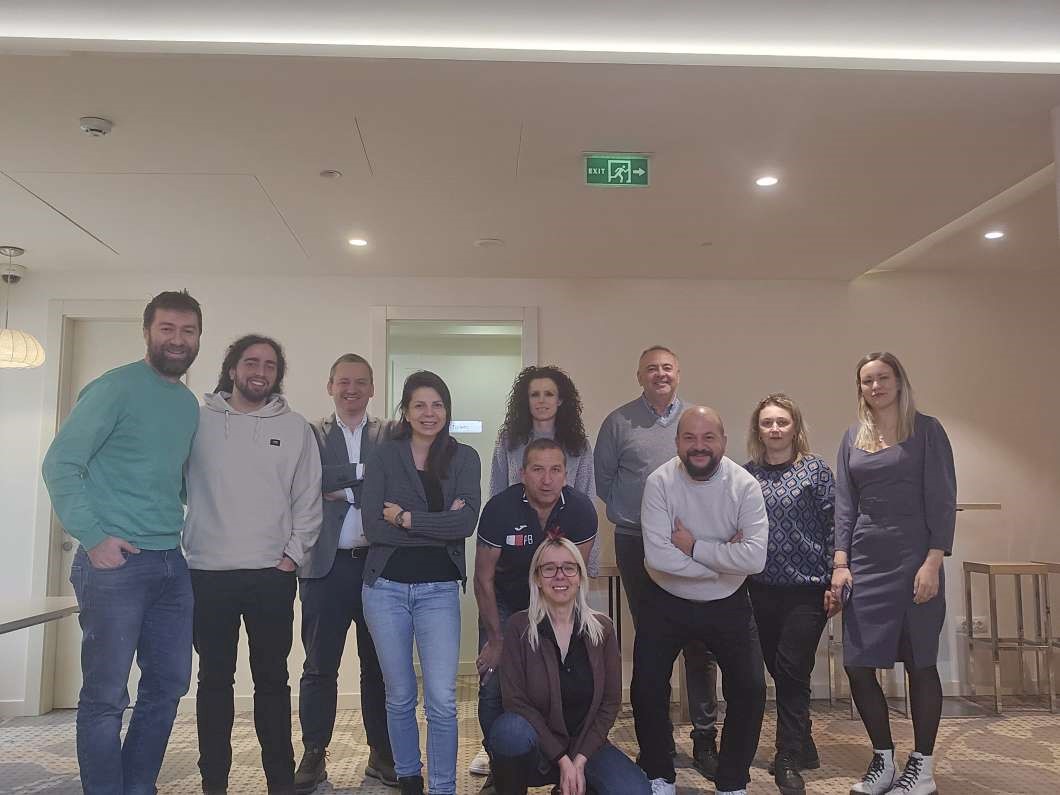
 Kick-Off Meeting Launches the “Play to Participate – Participate to Play (P2P)” Project
The European project “Play to Participate – Participate to Play (P2P)” officially launched with its Kick-Off Meeting held in Belgrade, Serbia, on 1st and 2nd February 2024. The meeting brought together representatives from all partner organizations to begin the implementation of this ambitious Erasmus+ cooperation project focused on strengthening youth participation, leadership, civic engagement, and inclusion through sport.
The project consortium includes partners from several European countries, combining expertise in youth work, sport, education, inclusion, and non-formal learning. Representatives attending the meeting included organizations such as NGO IUVENTA, TDM 2000 International, TDM 2000 Malta, Malta Football Association (MFA), RK Beograd, HWBF, Conexao, ASI, and FDIP. The meeting served as an important starting point for building collaboration, clarifying responsibilities, and establishing a shared vision for the successful implementation of the project.
During the opening session, the Project Coordinator welcomed participants and introduced the overall project framework, objectives, and expected impact. The consortium discussed the strategic importance of increasing youth participation in social and civic life through innovative sport-based approaches. Partners also reviewed the project’s management structure, communication methods, and reporting mechanisms to ensure effective coordination throughout the project lifecycle.
A major focus of the meeting was the presentation of the project’s six Working Packages (WPs), each led by a designated partner organization. The consortium carefully reviewed the objectives, timelines, deliverables, milestones, and responsibilities connected to each work package. Topics included project management and coordination, research activities, the establishment of Sport Youth Councils and Youth Boards, the Youth Leadership Programme, quality assurance processes, and dissemination and exploitation activities.
Special attention was given to the development of the Sport Youth Council and Youth Board activities, which are considered one of the project’s core innovations. Partners discussed the structure of future international and local training courses, the selection of young participants, and the preparation of practical guidelines and action plans that will empower young people to actively participate in decision-making processes within sport organizations and communities.
The consortium also reviewed the upcoming research phase of the project, which will examine youth participation in social and civic activities across partner countries while identifying good practices and mechanisms that use sport as a tool for engagement and inclusion. Partners agreed to collaborate closely on data collection methods, focus groups, surveys, and local implementation strategies to ensure meaningful and representative results.
Another important part of the meeting focused on dissemination and communication activities. Partners discussed the development of the project’s visual identity, website, dissemination strategy, newsletters, and social media presence. The project website, www.p2peuproject.org, was presented during the meeting, while partners committed to actively promoting project activities and results through their institutional communication channels and local events.
Throughout the two-day meeting, partners emphasized the importance of quality implementation, continuous monitoring, effective collaboration, and strong communication among consortium members. Several practical tools, templates, reporting procedures, and internal coordination systems were introduced to support smooth project management and ensure that all activities are delivered according to the agreed timeline.
The Kick-Off Meeting concluded with a shared commitment from all partners to work collaboratively toward creating inclusive and participatory opportunities for young people across Europe. Through sport, dialogue, leadership development, and civic engagement activities, the P2P project aims to empower youth voices and strengthen democratic participation at both local and European levels.